

Cataracts in Austin, TX
Cataracts are the leading cause of vision loss worldwide and affect the majority of adults over the age of 60 to some degree. Despite how common they are, many patients are uncertain about what cataracts actually are, when they need to be treated, and what to expect from the process. At Freedom Eye Care in Austin, TX, we monitor cataract development as a routine part of every comprehensive eye exam, help you understand when your cataracts may be affecting your daily life, and coordinate seamless surgical co-management when the time for treatment arrives.
Book OnlineWhat Are Cataracts?
The crystalline lens inside your eye is normally clear, allowing light to pass through cleanly and focus sharply on the retina. A cataract occurs when proteins within the lens begin to break down and clump together, causing the lens to become progressively cloudy, yellowed, or opaque. As the lens loses clarity, it scatters and distorts light entering the eye, resulting in increasingly blurry, hazy, or dim vision that glasses cannot fully correct.
Age-related cataracts are by far the most common type — a natural consequence of decades of UV exposure, oxidative stress, and the aging process affecting lens proteins. However, cataracts can also develop earlier due to diabetes (diabetic patients are at significantly higher risk — learn more about our diabetic eye care), prolonged corticosteroid use (which we monitor through our medication-related eye exams), previous eye injury or surgery, smoking, and excessive alcohol consumption. Congenital cataracts — present at or shortly after birth — can also occur and require prompt evaluation and treatment to prevent amblyopia in affected children.
Signs and Symptoms of Cataracts
Cataracts develop slowly, and most patients experience gradual, progressive changes rather than a sudden onset of symptoms. Common early signs include:
- Blurry, hazy, or foggy vision that glasses cannot fully correct
- Increased sensitivity to glare from sunlight, headlights, or overhead lighting
- Halos around lights, particularly at night
- Colors appearing faded, yellowed, or less vivid than before
- More frequent changes in your glasses or contact lens prescription
- Difficulty driving at night due to glare and reduced contrast sensitivity
- Double vision in one eye (monocular diplopia)
- A sensation of looking through a foggy window or smeared glass
One early phenomenon some patients notice — called “second sight” — is a temporary improvement in near vision as the lens stiffening associated with early cataract development creates a temporary increase in refractive power. This apparent improvement is typically short-lived as the cataract continues to progress.
Cataract Monitoring and Surgical Co-Management at Freedom Eye Care
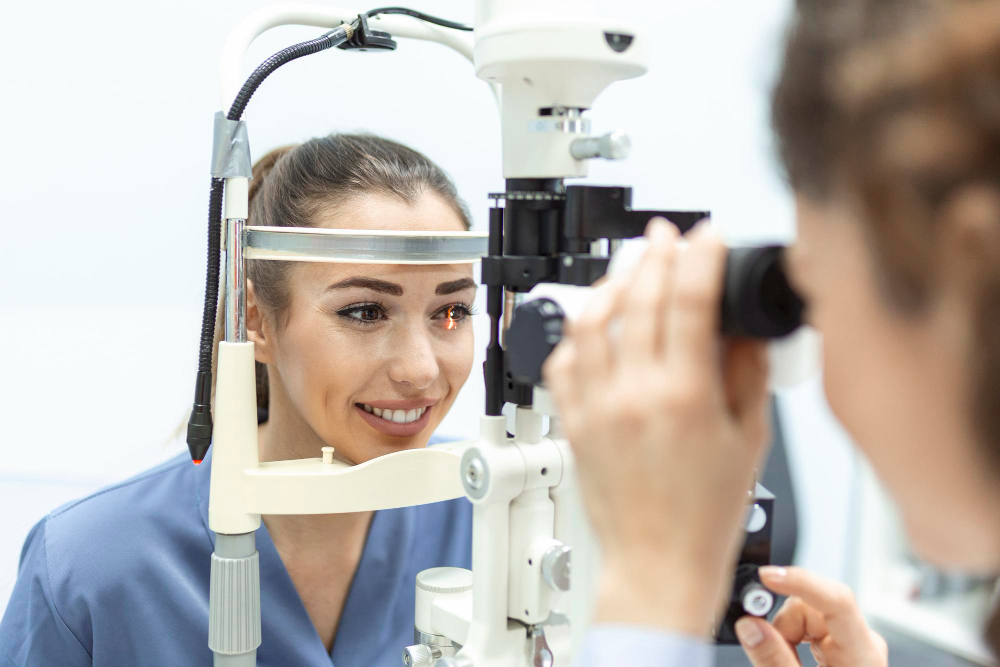
Not all cataracts require immediate surgical intervention. In the early stages, updated glasses or contact lens prescriptions, improved lighting, and anti-glare coatings can often help manage the visual impact of cataracts effectively. At Freedom Eye Care, we use digital retinal photography and slit-lamp biomicroscopy to document and monitor cataract development over time, providing a clear record of how your lens clarity is changing with each visit.
When cataracts progress to the point that they are affecting your ability to perform daily activities — reading, driving, working, or participating in hobbies you enjoy — cataract surgery becomes the recommended course of action. Cataract surgery is one of the safest and most successful surgical procedures performed today, with an extremely high rate of excellent outcomes. The cloudy natural lens is removed and replaced with a clear artificial intraocular lens (IOL), which can be selected to reduce or even eliminate your dependence on glasses post-surgery.
While Freedom Eye Care does not perform cataract surgery, we provide thorough pre-surgical evaluations and referrals to trusted ophthalmologists in Austin, TX, and we remain your primary eye care provider for ongoing monitoring before and after surgery. Call us at (512) 916-4600 or schedule your cataract evaluation online today.
Frequently Asked Questions About Cataracts in Austin, TX
At what age do cataracts typically develop?
Most people begin developing some degree of lens clouding in their 40s and 50s, though symptoms significant enough to affect daily life typically emerge in the 60s and 70s. By age 80, more than half of all Americans either have cataracts or have had cataract surgery. However, cataracts can develop earlier in patients with diabetes, a history of steroid use, or significant UV exposure, which is why regular monitoring at Freedom Eye Care matters at any age.
Can cataracts be treated with eye drops or medication?
Currently, there are no FDA-approved eye drops or medications that have been clinically proven to reverse or meaningfully slow cataract progression. Some research into anti-cataract agents is ongoing, but surgical removal remains the only definitive treatment for cataracts that are affecting vision. Updated glasses, better lighting, and anti-glare lenses can help manage mild cataract symptoms in the interim.
How do I know when it’s time to have cataract surgery?
The right time for cataract surgery is when your cataracts are significantly affecting your quality of life — your ability to read, drive safely, do your job, or enjoy activities you care about. There is no single visual acuity threshold that triggers surgery. The decision is based on a combination of your exam findings and how your vision is affecting your daily function. At Freedom Eye Care, we track your cataract progression and discuss the surgical decision with you honestly when the time approaches.
Will I still need glasses after cataract surgery?
This depends on the type of intraocular lens (IOL) selected for your surgery. Standard monofocal IOLs are set for one distance — most often distance vision — and most patients still need reading glasses. Premium IOLs including multifocal, extended depth-of-focus (EDOF), and toric lenses can reduce or eliminate dependence on glasses for some or all distances. Your surgeon and our team at Freedom Eye Care will help you understand which IOL option is best suited to your vision goals and lifestyle.
Can cataracts come back after surgery?
The natural lens is permanently removed during cataract surgery and cannot re-cloud. However, a common secondary condition called posterior capsule opacification (PCO) — sometimes called a “secondary cataract” — can develop months to years after surgery when the thin membrane supporting the IOL becomes cloudy. PCO is treated quickly and painlessly with a non-surgical laser procedure (YAG capsulotomy) in the office. Freedom Eye Care monitors for PCO as part of post-surgical care.
Does UV exposure really cause cataracts?
Yes. Cumulative UV-B exposure is one of the most well-established risk factors for age-related cataracts. UV radiation damages the proteins in the crystalline lens over time, accelerating the clouding process. Wearing UV-400 protective sunglasses and broad-brimmed hats whenever you are outdoors is one of the most practical things you can do to slow cataract development. Freedom Eye Care offers a full range of prescription sunglasses with complete UV protection.