

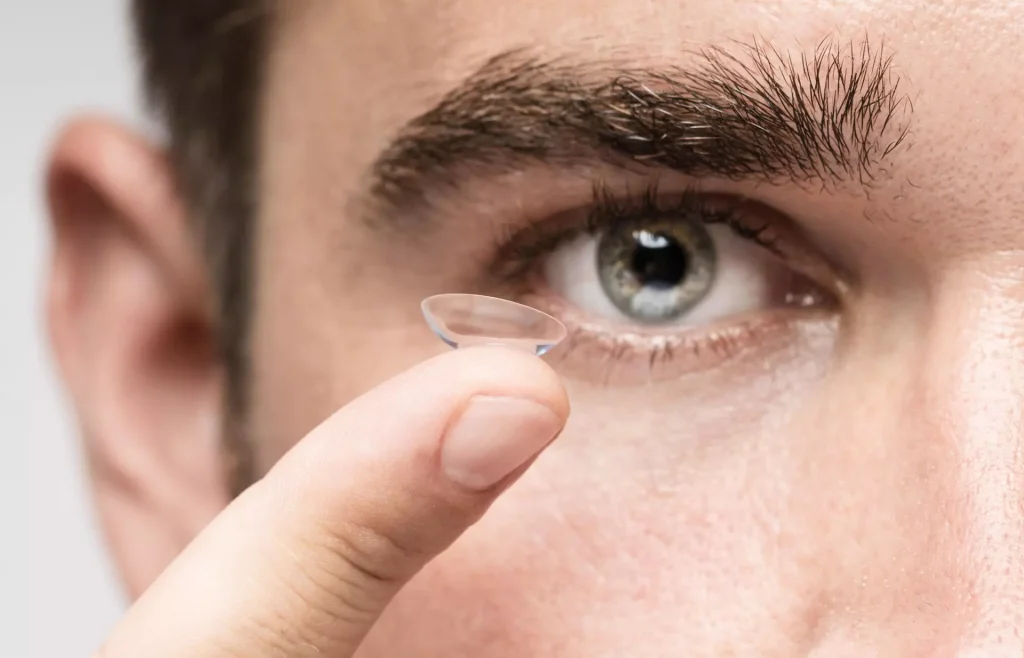
Contact Lens Prescription in Austin, TX
A contact lens prescription is much more than a number on a card — it is a precise, clinically verified document that ensures every lens you place on your eye is safe, comfortable, and perfectly matched to your cornea and vision needs. At Freedom Eye Care in Austin, TX, we take the time to measure, fit, and verify every element of your contact lens prescription with care. Whether you are a first-time wearer or renewing an existing prescription, our thorough approach means you never have to settle for lenses that feel less than perfect.
Book OnlineWhat a Contact Lens Prescription Includes
Unlike an eyeglass prescription, a contact lens prescription contains additional measurements specific to how a lens sits and functions on the surface of your eye. Each value plays an important role in determining the right lens for your eyes:
- Power (PWR or SPH): The corrective strength of the lens — identical in purpose to the sphere value on a glasses prescription, but adjusted for the fact that the lens rests directly on the eye rather than at a distance from it.
- Base Curve (BC): A measurement of the curvature of the back surface of the contact lens, which must correspond closely to the natural curve of your cornea. An incorrect base curve leads to discomfort, poor lens movement, and potential corneal damage over time.
- Diameter (DIA): The total width of the contact lens from edge to edge. This measurement ensures the lens covers the appropriate area of the eye and does not extend too far onto the sclera or too close to the visual center.
- Cylinder and Axis (for toric lenses): Patients with astigmatism need additional values that define the orientation and degree of the astigmatic correction needed to keep the lens stable and the vision sharp.
- Add Power (for multifocal lenses): The additional near-vision correction built into multifocal or bifocal contact lenses for patients with presbyopia.
- Brand and Lens Material: Contact lens prescriptions are brand-specific — different manufacturers produce lenses with slightly different base curves, diameters, and oxygen transmissibility levels, all of which affect how a lens performs on a specific eye.
Understanding these values empowers you to make informed decisions when reordering your lenses. All patients with a current prescription on file at Freedom Eye Care can reorder conveniently through our online contact lens ordering portal.
Signs You May Need a New Contact Lens Prescription
Because contact lenses rest directly on the corneal surface, even small shifts in prescription accuracy or lens fit are quickly felt. Recognizing these signs early helps you address the issue before it affects your eye health:
- Blurry or cloudy vision that does not improve with blinking or cleaning the lens
- Dry, irritated, or red eyes — especially toward the end of the day
- A persistent gritty, scratchy, or burning sensation while wearing lenses
- Lenses that move excessively, feel off-center, or seem to fold on the eye
- Headaches or eye strain after activities requiring focused near or distance vision
- Difficulty seeing clearly at night, even with clean lenses in
- Increasing difficulty with near tasks if you are over 40, suggesting the onset of presbyopia
If you notice any of these symptoms, do not continue wearing lenses that are not working for you. Schedule an updated contact lens exam at Freedom Eye Care and we will reassess your prescription and fit. Children and teenagers may need more frequent prescription updates as their eyes continue to develop, and adults may notice changes accelerate after age 40. Keeping your prescription current protects your eyes and keeps your vision at its sharpest.
The Technology Behind Accurate Contact Lens Prescriptions
Achieving the most accurate contact lens prescription requires tools that go beyond what the eye alone can observe. At Freedom Eye Care, we use modern diagnostic technology to measure and map your eyes with precision before selecting a trial lens. Our process may include:
- Corneal Topography: Creates a detailed color-coded map of the shape and curvature of your cornea, identifying irregularities that affect lens fit and selection — particularly important for patients with astigmatism or conditions like keratoconus.
- Keratometry: Measures the curvature of the central cornea to determine the ideal base curve for your lenses.
- Tear Film Analysis: Evaluates the quality and stability of your tear film to identify dry eye disease that could interfere with lens comfort and inform which lens material and replacement schedule is best suited for your eyes.
- Slit-Lamp Biomicroscopy: Allows our optometrist to observe trial lenses on your eye under high magnification, assessing centration, movement, and coverage to ensure the fit is optimal before finalizing your prescription.
- Digital Refraction: Precise measurement of your refractive error using automated tools combined with subjective testing to fine-tune the corrective power of your lenses.
After all measurements are complete and trial lenses have been evaluated on your eyes, Freedom Eye Care will finalize your prescription and walk you through lens care, replacement schedules, and safe wearing habits. For patients new to contact lenses, we provide hands-on instruction for insertion and removal before you leave our office. Call us at (512) 916-4600 or book your contact lens prescription exam online today.
Frequently Asked Questions About Contact Lens Prescriptions in Austin, TX
How is a contact lens prescription different from a glasses prescription?
A glasses prescription and a contact lens prescription both correct the same refractive errors, but they are not interchangeable. Contact lenses rest directly on the cornea, which changes the effective power needed. Contact lens prescriptions also include base curve and diameter measurements that ensure a safe, properly fitting lens. Additionally, contact lens prescriptions are brand-specific — the exact lens material and design are specified. Freedom Eye Care provides both types of prescriptions through separate exams.
Can I use my contact lens prescription to order online?
Yes, as long as your prescription is current and valid. Contact lens prescriptions in Texas are valid for one year. Freedom Eye Care makes reordering easy through our online ordering portal. Simply log in with your account, select your lenses, and your order will be shipped directly to you. You can also track your order using our order tracker. If your prescription has expired, you will need to schedule an updated contact lens exam before reordering.
What happens at a contact lens follow-up appointment?
A contact lens follow-up appointment at Freedom Eye Care is a brief but important visit — typically scheduled one to two weeks after you begin wearing new lenses. Your optometrist will assess how the lenses are sitting, moving, and performing on your eyes, check your vision with the new lenses in place, and evaluate your corneal health under the slit lamp to ensure no adverse effects are occurring. This visit is how we confirm that your prescription is accurate and that your lenses are safe for continued wear.
Why does my contact lens prescription need to specify a brand?
Different contact lens brands — even those with the same power — are manufactured with different base curves, diameters, oxygen permeability levels, and lens materials. These differences significantly affect how a lens fits on your specific cornea and how comfortable and healthy it is for daily wear. What works well for one patient may not suit another with the same prescription power. This is why Freedom Eye Care fits trial lenses before finalizing any prescription — to confirm the specific brand and design performs well on your eyes.
What is corneal topography and do I need it for my contact lens exam?
Corneal topography creates a precise, color-coded map of the surface of your cornea, capturing its exact shape and curvature at thousands of points. This information is particularly valuable for fitting toric lenses for astigmatism, multifocal lenses, and specialty lenses like RGP or scleral lenses. It is also important for patients with irregular corneas, previous eye surgery, or keratoconus. Not every contact lens patient requires topography, but for patients with complex prescriptions or corneal irregularities, it significantly improves the accuracy of the fitting process at Freedom Eye Care.
How do I know which contact lens type is right for me?
The right lens for you depends on your prescription, your corneal shape, your tear film health, how often you plan to wear lenses, and your lifestyle. During your contact lens exam, Freedom Eye Care takes all of these factors into account. Patients with dry eye may do better with daily disposable lenses or specialty materials. Active patients often prefer lenses with higher oxygen transmissibility. Patients over 40 may benefit from multifocal or monovision fitting. Our goal is always to find the lens that provides the clearest vision, the best comfort, and the greatest safety for your unique eyes.
What should I do if I run out of contact lenses before my next exam?
If you have a valid prescription on file with Freedom Eye Care, you can reorder your lenses through our online ordering portal at any time. If your prescription has expired, contact our office at (512) 916-4600 — we will work to schedule your exam as quickly as possible and can advise on whether wearing your existing lenses for a short additional period is appropriate for your situation. Never purchase contact lenses without a valid prescription, as improperly fitted lenses can damage your cornea.