

Amblyopia (Lazy Eye) in Austin, TX
Amblyopia — commonly known as lazy eye — is the most common cause of vision impairment in children, affecting approximately 2–3% of the population. Despite the familiar nickname, amblyopia is not about a physically “lazy” eye that wanders. It is a developmental condition in which the brain fails to fully process visual input from one eye, resulting in reduced vision that cannot be fully corrected with glasses alone. At Freedom Eye Care in Austin, TX, early detection and prompt treatment are the keys to the best possible outcomes — and our comprehensive pediatric eye exams are specifically designed to catch amblyopia before the window for effective treatment closes.
Book OnlineWhat Causes Amblyopia?
Amblyopia develops during early childhood when the visual system is still in a critical period of development. The brain and eyes learn to work together through experience during these early years — if one eye provides a consistently clearer, stronger signal to the brain, the brain begins to favor that eye and progressively suppresses input from the weaker one. Over time, the visual pathways connected to the suppressed eye become underdeveloped, resulting in reduced vision that persists even when the underlying physical cause is corrected. The most common causes of amblyopia include:
- Strabismus (eye misalignment): When one eye turns in, out, up, or down instead of pointing straight ahead, the brain suppresses the misaligned eye’s image to avoid double vision. This is the most well-known cause of amblyopia.
- Anisometropia (unequal refractive error): When one eye has a significantly different prescription than the other — one eye may be more nearsighted, more farsighted, or have more astigmatism — the brain receives one clear image and one blurry image and preferentially uses the eye that sees more clearly. Anisometropic amblyopia is often the most difficult to detect without a formal eye exam, as the child’s overall vision may appear functional.
- Deprivation amblyopia: Caused by anything that physically blocks vision in one eye during early development, such as a congenital cataract, ptosis (drooping eyelid), or corneal opacity. This form requires the most urgent treatment.
Diagnosing and Treating Amblyopia
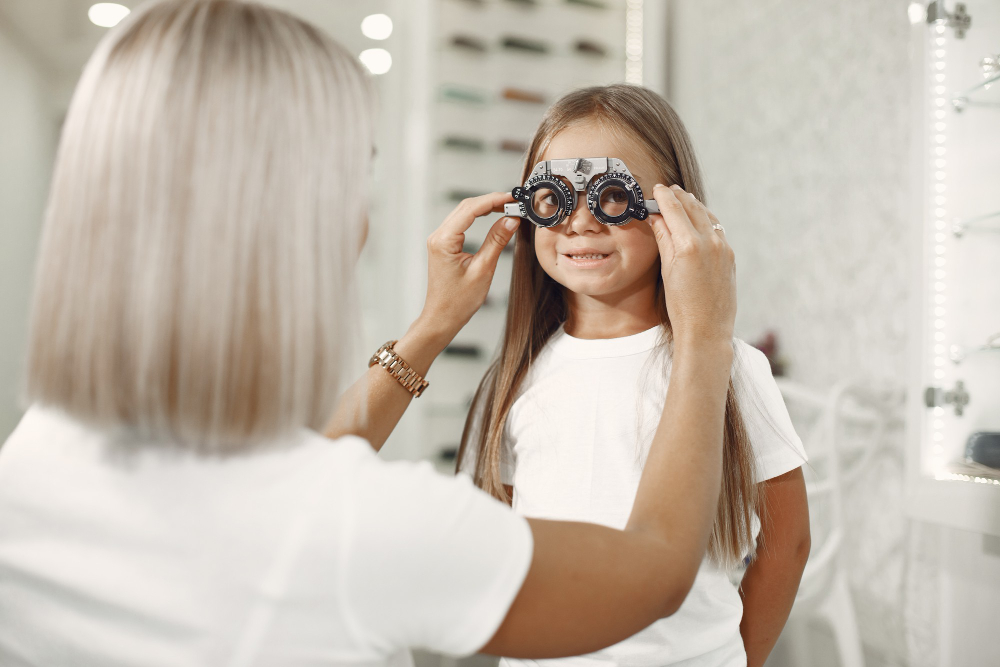
Amblyopia cannot be diagnosed with a simple school vision screening — only a comprehensive eye exam can reveal the difference in visual acuity between the two eyes and identify the underlying cause. At Freedom Eye Care, every pediatric exam includes testing for amblyopia, eye alignment, and refractive error in both eyes. The earlier amblyopia is identified, the better the treatment outcomes — the visual system is most plastic and responsive to treatment during the early childhood years, with treatment becoming progressively less effective as a child gets older. Treatment is still possible in older children and even some adults, but early intervention is ideal.
Treatment for amblyopia always begins by addressing the underlying cause — providing the correct glasses prescription if a refractive error is present, treating strabismus, or removing the obstruction in cases of deprivation amblyopia. Beyond correcting the cause, treatment focuses on forcing the brain to use the weaker eye and strengthen those visual pathways. The most common approaches include:
- Patching: Covering the stronger eye with an adhesive patch for a prescribed number of hours each day forces the brain to rely on and develop the weaker eye. Patching remains the most widely used and evidence-supported amblyopia treatment.
- Atropine Eye Drops: A drop placed in the stronger eye once daily temporarily blurs near vision in that eye, encouraging the brain to use the weaker eye. This can be an effective alternative for children who resist patching.
- Vision Therapy: Structured visual exercises and activities — sometimes incorporating digital or game-based tools — that train both eyes to work together and develop the visual skills needed for comfortable binocular vision.
If your child has been diagnosed with amblyopia, or if you have noticed any eye turn, frequent squinting, head tilting, or difficulty with depth perception, contact Freedom Eye Care at (512) 916-4600 or schedule a pediatric eye exam online today. Early action makes all the difference.
Frequently Asked Questions About Amblyopia in Austin, TX
Will my child outgrow amblyopia without treatment?
No. Amblyopia does not resolve on its own — in fact, without treatment, the visual suppression typically becomes more entrenched over time as the brain’s visual pathways continue to develop without equal input from both eyes. The good news is that amblyopia responds well to treatment when identified early. Delaying treatment reduces the likelihood of achieving full visual recovery, which is why prompt evaluation at Freedom Eye Care is so important when amblyopia is suspected.
What is the best age to treat amblyopia?
Treatment is most effective during the critical period of visual development — generally from birth through age 7 or 8, when the brain’s visual pathways are most plastic and responsive to change. However, research has shown that meaningful improvement is achievable in children up to age 12 or even older with appropriate treatment. Adults with amblyopia may experience more limited improvement, but emerging evidence suggests some benefit is possible even in adulthood with intensive treatment approaches.
How long does amblyopia treatment take?
Treatment duration varies depending on the severity of the amblyopia, the child’s age, the cause, and their compliance with the prescribed therapy. Some children show significant improvement within weeks of starting patching or atropine therapy; others may require months of consistent treatment. Relapses are possible after treatment is discontinued, so monitoring at Freedom Eye Care continues even after vision improvement is achieved to ensure the gains are maintained.
Can amblyopia affect both eyes at once?
Classic amblyopia typically affects one eye more than the other. However, bilateral amblyopia — affecting both eyes — can occur in cases of bilateral high hyperopia, bilateral deprivation, or nystagmus. Bilateral amblyopia is less common but just as important to identify and treat early. All pediatric eye exams at Freedom Eye Care evaluate both eyes thoroughly to identify any asymmetry in visual development.
My child’s school vision screening was normal — can they still have amblyopia?
Yes, absolutely. School vision screenings test each eye separately using a distance chart, and a child with amblyopia in one eye often “passes” the test because their good eye compensates well enough. The screening cannot detect subtle differences in best corrected visual acuity between the two eyes, which is the hallmark of amblyopia. Only a comprehensive pediatric eye exam at Freedom Eye Care can reliably diagnose amblyopia.
Does amblyopia cause the eye to look different or turn?
Not always. While amblyopia is sometimes associated with strabismus (eye turn), many children with amblyopia — particularly anisometropic amblyopia — have no visible eye turn and appear completely normal to casual observation. This is why amblyopia is so often missed without a formal eye exam. Parents should not assume that straight-looking eyes mean both eyes are developing normally.