

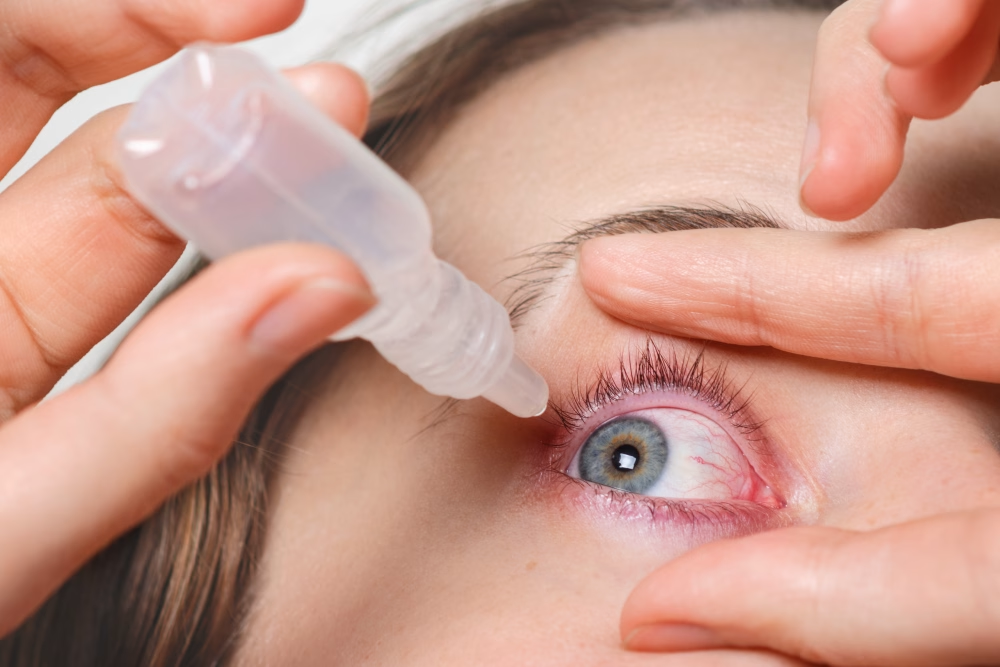
If your eyes feel dry, gritty, burning, or exhausted by mid-afternoon — and the feeling gets worse the longer you stare at a screen — you are not imagining it. Dry eye disease and digital eye strain are two of the most common complaints we manage at Freedom Eye Care in Austin, TX, and they very frequently occur together. Understanding why screens make your eyes feel so bad is the first step toward doing something about it.
Blinking Less Is a Bigger Problem Than You Think
Under normal conditions, the average person blinks approximately 15–20 times per minute. Blinking is not just a reflex — it is the mechanism by which the tear film that coats the surface of your eyes is spread and refreshed. When you look at a screen, your blink rate drops dramatically — research published in the National Library of Medicine confirms blink rates as low as 5–7 per minute during concentrated screen use. That is a 60–70% reduction.
The result is rapid tear evaporation, which leaves the ocular surface exposed and irritated. Over hours of screen use, this creates a cycle of dryness, inflammation, and discomfort that compounds throughout the day. This is why your eyes feel fine in the morning and progressively worse by afternoon.
The Role of Meibomian Gland Dysfunction
The outer, oily layer of the tear film is produced by meibomian glands — tiny oil-secreting glands along the margins of your upper and lower eyelids. This oily layer is what slows tear evaporation and keeps the eye surface lubricated between blinks. When these glands become clogged or dysfunctional — a condition called meibomian gland dysfunction (MGD) — the oily layer is compromised and tears evaporate far faster than they should.
MGD is now recognized as the leading cause of dry eye disease, and screen use makes it worse because the reduced blink rate during screen time means the meibomian glands are expressed less frequently. Over time, the glands can become clogged and atrophied, leading to chronic dry eye that does not improve simply by stepping away from the screen. The Tear Film and Ocular Surface Society has identified MGD as a primary driver of evaporative dry eye in working-age adults — a demographic heavily represented among Austin’s tech and professional workforce.
Signs You May Have Dry Eye Disease, Not Just Tired Eyes
There is an important distinction between normal end-of-day eye fatigue and dry eye disease. Dry eye is a chronic condition — not just a transient symptom of a hard day’s work. Signs that your symptoms may reflect dry eye disease rather than simple eye strain include:
- Symptoms that recur daily, not just occasionally
- Burning, stinging, or a sandy/gritty sensation that persists even after rest
- Excessive tearing (paradoxically — dry eyes often trigger reflex tearing)
- Difficulty wearing contact lenses for a full day without discomfort
- Vision that is blurry or fluctuating, particularly after prolonged near work
- Redness that returns consistently after exposure to air conditioning, wind, or screens
If these symptoms sound familiar, an evaluation at Freedom Eye Care in Austin includes a tear film analysis, meibomian gland assessment, and slit-lamp examination to determine the type and severity of your dry eye and develop a targeted treatment plan.
What Actually Helps (Beyond Artificial Tears)
Over-the-counter artificial tears provide temporary symptomatic relief but do not address the underlying causes of dry eye disease. If you are using artificial tears multiple times a day and still symptomatic, it is time for a more targeted approach. Effective treatments we offer at Freedom Eye Care include:
- Prescription anti-inflammatory drops (Restasis, Xiidra) to reduce ocular surface inflammation
- In-office meibomian gland expression to restore healthy oil flow
- Warm compresses and lid hygiene protocols
- Omega-3 supplementation with clinical-grade formulations
- Punctal plugs to reduce tear drainage and maintain moisture
- Specialty scleral contact lenses for patients with severe dry eye who also wear contacts
Beyond treatment, simple behavioral changes make a meaningful difference: consciously blinking more often during screen use, applying the 20-20-20 rule (every 20 minutes, look 20 feet away for 20 seconds), positioning screens below eye level to reduce the exposed ocular surface area, and using a humidifier in air-conditioned workspaces.
Don’t Normalize the Discomfort
Dry, irritated eyes at the end of a workday might feel like a normal part of modern work life — but they do not have to be. Chronic dry eye is a progressive condition that is much easier to manage when treated early than after gland atrophy and chronic inflammation have taken hold. If your eyes hurt every day, that is a signal worth acting on.
Call Freedom Eye Care in Austin at (512) 916-4600 or schedule your dry eye evaluation online. Relief is available — and it starts with an accurate diagnosis.